

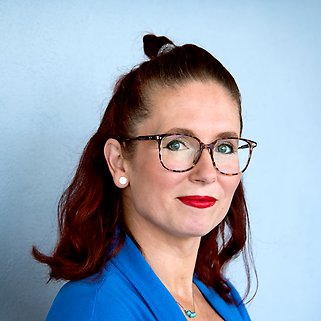
Dominika Vergara Polanska
Associate Professor
Senior Lecturer
Dominika is an Associate Professor in Sociology and works as a senior lecturer in Social Work. More info on my research: www.dominikavpolanska.se & www.sustainaction.org.
Social Sciences
ME137
Dominika is an Associate Professor in Sociology and Senior Lecturer in Social work.
She examined gated communtities and their growing popularity in Poland in her dissertation (2011). She has in her research focused on social movements working with housing related issues in Central and Eastern Europe (mainly Poland), but also in Sweden. Her research interests encompass: urban social movements, extra-parliamentary activism, squatting, tenants' mobilizations, informal organization, and non-traditional forms of civic engagement.
I work in the field of urban sociology and my main research interests can be summarized in three themes:
- Privatization of urban spaces: gentrification, displacement and the role of housing
- Urban social movements: squatting, tenants’ mobilizations and the right to the city
- Civil society and non-traditional civic engagement
Empirically I have conducted studies in Poland and Sweden. I am interested in how cultural and political contexts are conditioning the emergence and development of particular protests and movements, and above all in the motivations behind these mobilizations.
An important aspect in my research has been to go beyond the division of East and West and the established conceptualizations of civil society. In my research I uphold a critical perspective by taking into account less “successful” or visible cases of mobilization, focusing on the excluded perspectives, and working closely and oftentimes collaboratively with my "research objects".
Recently I have done research on residents' perceptions of costly renovation and displacement, where I have focused on individual and collective resistance to renovations among tenants.
My most recent research revolves around social sustainability and housing policy in Sweden.
The researcher is not participating in any projects at this moment.