
When civil society is forced to speak the state’s language
Despite increasing repression, non-governmental organisations in Russia are continuing their work. However, the boundaries of what is permitted are constantly shifting, and many NGOs must adapt both their language and their activities to survive.
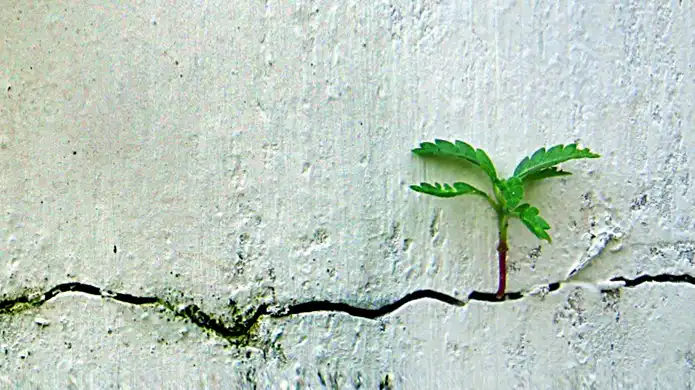
Photo: Istockphoto
“It’s like dancing on broken glass. Something that could be said openly a month ago may now be banned – and you don’t find this out through new regulations, but through someone being arrested,” says Dmitrii Dorogov, who has a PhD in gender studies and has studied different perspectives on Russian civil society.
Compared with many Western European countries, Russian civil society is young. Independent organisations and movements gradually began emerging after the Soviet Union collapsed in the early 1990s.
“The state could not solve all of society’s problems, so people organised. This included organisations that worked with HIV care, support for people living with HIV, and issues that the public healthcare system did not always manage successfully,” he says.
The organisations that emerged in the 2000s became an important part of civil society, but as the state became increasingly authoritarian, controls tightened. More and more issues have become politically sensitive, and independent organisations have less room to manoeuvre.
Russia’s full-scale invasion of Ukraine further changed the situation, with many of the most active figures leaving the country. At the same time, it became more difficult for those who stayed to continue their work.
Adapting to survive
The people and organisations that remain in Russia have been forced to find new ways of carrying out their work. In some cases, this has involved adapting their language to the official ideology.
“If you want to continue working on an issue, sometimes this needs to be phrased in a way that fits the official rhetoric. You can still do some good things, but you have to adapt if you are to continue,” says Dorogov.
Organisations that work with social issues can still conduct their activities, but often using different labels. What used to be described as feminist work may now need to be justified through references to the family or traditional values.
Others adopt a different strategy: presenting their work as technical or local, rather than political. In the field of HIV, shortcomings in healthcare or drug shortages can still be highlighted, as long as this criticism is not perceived as questioning the government’s overall policy.
When boundaries constantly shift
There are many challenges, but formal rules that are not necessarily those are the most difficult to deal with, says Dorogov. The problem is that no one knows for certain where the limits are.
“The government doesn’t come to you and say that something is no longer permitted. Instead, someone is arrested, and then everyone understands that the boundaries have closed in,” he says.
This creates a situation in which people try to pre-empt the authorities by themselves restricting what they say and do.
“No one wants to be the first person to be used as an example, so everyone tries to anticipate what could be dangerous and adapt in advance.”
Self-censorship is part of everyday life
This development affects not only civil society organisations, but society as a whole. Dorogov compares the situation to the Soviet phenomenon of thinking one thing in private and expressing something else in public.
When people no longer know who they can trust, it also makes collective organisation more difficult.
“In an authoritarian system, knowing what people are thinking is not important. What is important is that people cannot meet up and organise themselves politically,” he says.
Despite increasing repression, civil society is not disappearing entirely, but its forms are changing. Organisations are becoming more cautious, adapting their language and avoiding issues that could be perceived as political.
“There will always be people who continue to speak their minds and who are prepared to take risks, but the space for them is shrinking,” says Dorogov.
Dmitrii Dorogov is a researcher in Gender Studies at Södertörn University. His research focuses on health, civil society and state governance in Russia and other post-Soviet societies.
He leads a project funded by the Foundation for Baltic and East European Studies, The Return of Repressive Psychiatry: Biopolitics of Mental Health in Putinite Russia (2025–), which is examining how psychiatry is used as part of the Russian state’s systems of repression.
Sidinformation
- Page last updated
- 2026-09-21
- Sender
- Communication and Public Relations